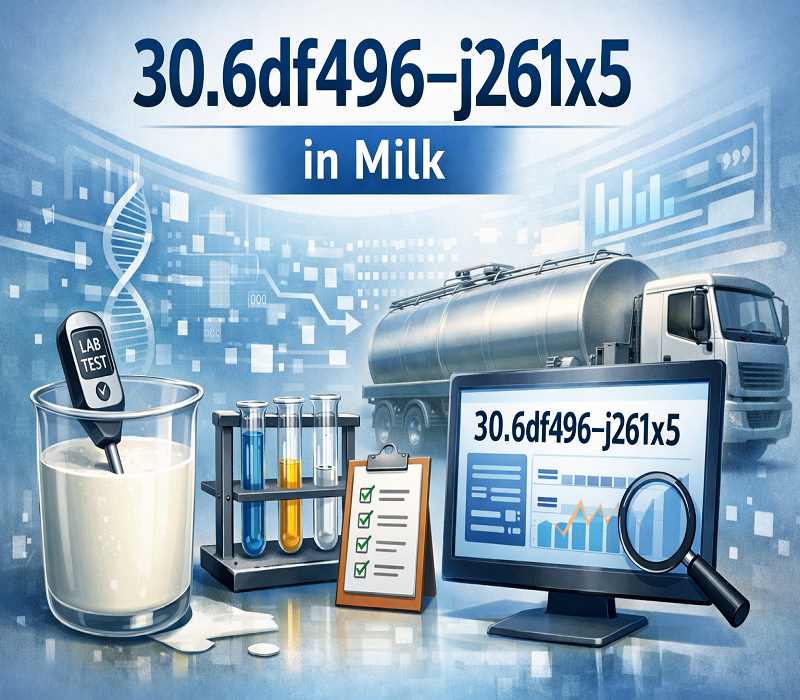
Milk is an important part of everyday life, so the dairy industry uses modern digital systems to keep its quality and safety in check. 30.6df496–j261x5 in milk is not something mixed into milk and it is not a chemical or ingredient. It is simply a system-generated code used in digital records. This type of code helps experts track milk batches, review test results, and organize quality data in a clear way. These codes allow dairy professionals to follow milk from testing to storage without confusion. For regular consumers, this code does not change the milk itself. It only shows that technology is being used behind the scenes to manage and verify milk information properly.
What Is 30.6df496–j261x5 in Milk?
30.6df496–j261x5 in milk is best understood as a digital reference used inside dairy testing systems. It does not describe taste, nutrition, or an ingredient added to milk. Instead, laboratories and quality teams use such codes to group complex test information under one short label. This allows them to record results related to freshness, safety checks, and composition without writing long explanations every time. Because milk spoils quickly, accurate tracking matters, and coded identifiers help different systems share the same data smoothly. For professionals, this code acts like a shortcut to detailed records. For everyday consumers, it has no direct role in how milk looks, tastes, or is used at home.
Why Does This Code Appear in Milk Data?
This type of code appears in milk records because modern dairy work depends on organized digital tracking. As milk moves from farms to testing centers and then into distribution systems, large amounts of data are created. Instead of writing long explanations for every test or check, experts rely on short coded references like 30.6df496–j261x5 to connect results to a specific sample or batch. These identifiers help laboratory software, quality databases, and internal reports stay aligned without confusion. Most of the time, such codes remain inside professional systems and are not meant for shoppers. Their role is to support accuracy, speed, and traceability in milk handling, not to describe anything added to the milk itself.
Is It Actually Something Inside Milk?
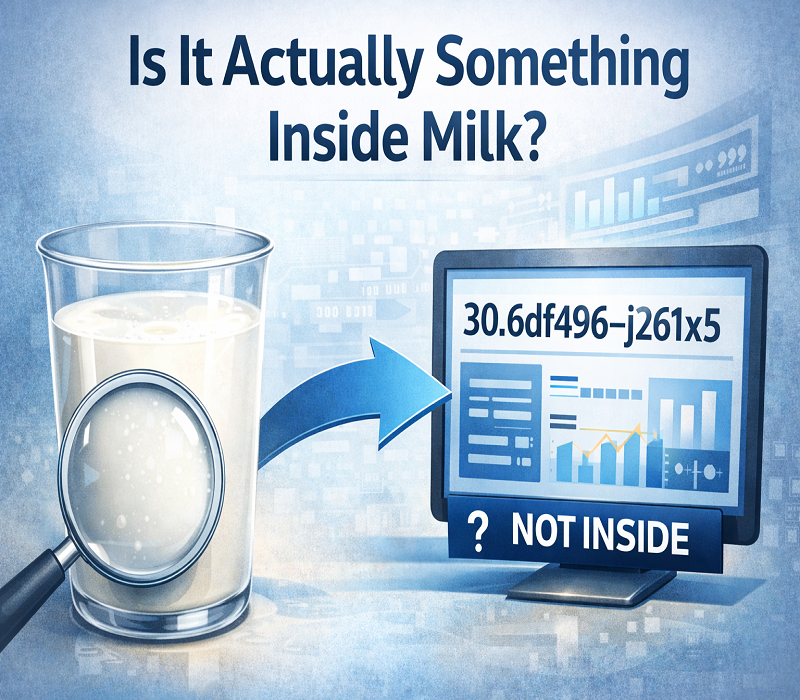
Many people assume this kind of code means something has been mixed into milk, but that is not the case. 30.6df496–j261x5 does not exist inside the liquid, nor does it interact with milk in any physical way. It is a reference point used outside the product, mainly during quality checks and data recording. The milk you drink remains exactly the same whether this code exists or not. These identifiers are created to organize information, not to describe ingredients. Even after packaging, the code stays in digital systems, not in the milk itself. Its purpose is communication between experts, not modification of food.
How Does 30.6df496–j261x5 Help Dairy Farmers?
This system code supports dairy farmers by turning complex milk test data into simple, organized records. Instead of relying on handwritten notes or long reports, farmers can use structured digital references to understand milk quality faster. This makes daily decisions easier and reduces the risk of errors during testing and reporting.
Support for Dairy Farmers
- Speeds up milk testing records
- Reduces manual entry mistakes
- Helps retrieve lab results quickly
- Makes quality trends easier to track
- Improves control over milk batches
Support for Dairy Systems
- Keeps farm and lab data connected
- Helps systems share the same records
- Simplifies audits and inspections
Benefits for Consumers
- Helps maintain milk safety standards
- Supports fresh and clean products
- Improves transparency in quality checks
- Builds trust through better monitoring
How Dairy Systems Record Flavor and Texture Information

Modern dairy testing records flavor and texture as measurable qualities, not as substances mixed into milk. These details help experts understand milk performance while keeping all information organized inside digital systems.
- Flavor and texture are evaluated through controlled lab methods
- Properties like thickness and smoothness are measured, not added
- Test outcomes are saved as digital data points
- Codes like 30.6df496–j261x5 connect multiple results to one sample
- Short identifiers reduce confusion between milk batches
- Records can be reviewed later without rewriting long reports
Role in Today’s Dairy Technology
In modern dairy operations, digital tools handle most of the testing and monitoring work. System codes like 30.6df496–j261x5 help connect machines, software, and records so milk data stays organized and accurate across every stage.
How It Fits into Modern Systems
- Machines test milk and generate raw data
- Sensors monitor conditions like temperature
- Software saves results using short codes
Why This Matters
- Reduces dependence on manual reporting
- Lowers the chance of human error
- Keeps quality checks consistent and fast
Conclusion
30.6df496–j261x5 in milk is a technical reference code, not an ingredient or chemical. It is used in dairy testing systems to organize and track milk quality data. This code does not affect the milk you drink in any way. It only supports accuracy and safety behind the scenes.
FAQs:
1. Is 30.6df496–j261x5 an ingredient added to milk?
No, it is not added to milk. It is only a digital code used in testing records.
2. Does this code affect milk taste or quality?
No, it does not change taste, smell, or quality in any way.
3. Why do dairy labs use codes like 30.6df496–j261x5?
They use it to organize test results quickly and avoid data confusion.
4. Can normal consumers see this code on milk packaging?
Usually no. These codes stay inside professional and digital systems.
5. Is milk still safe if this code exists in records?
Yes, completely safe. The code only helps with tracking and quality checks.
Disclaimer
This article is for general information only. The term 30.6df496–j261x5 does not represent a food ingredient or health claim. The explanation is based on common dairy and digital tracking practices. Always check official sources for product-specific details.
For more visit our Site: https://rakeback.blog/



Thanks for your clarification. Yes, that’s exactly the point of the article — 30.6df496–j261x5 is not an ingredient or substance in milk or water, but only a system-generated reference used in digital records. The article focuses on clearing this common confusion.